
Springdale Directory Collections Surviving
The most detailed verified shelf list comes from the Shiloh Museum research library. Its books are for on-site use, and an appointment lets staff pull chosen items before a visit. The inventory starts with an early Springdale directory dated 1908. That is the earliest cataloged item found, not proof that no earlier book was printed. The list then moves through telephone, business, locator, city, and regional directory formats.
| Collection | Verified years | Where held | Access |
|---|---|---|---|
| Early Springdale directory | 1908 | Shiloh Museum | On-site use |
| Southwestern Bell telephone books | 1920 through regional editions in 1982, with gaps | Shiloh Museum | On-site use |
| Sterling business and city books | 1952 and 1959 | Shiloh Museum | On-site use |
| Moorhead directories | 1961-62 through 1972, with gaps | Shiloh Museum | On-site use |
| Johnson locators and city books | 1974 through 1988, with gaps | Shiloh Museum | On-site use |
| Polk and cross-reference books | 1994 through 2009, with gaps | Shiloh Museum | On-site use |
| Regional and telephone publishers | 1987 through 2016, selected years | Shiloh Museum | On-site use |
The newest Springdale-serving printed item verified in the museum inventory is the 2016 Northwest Arkansas Phone Book. Publication names and geographic scope change over time. A Fayetteville-Springdale or four-city edition may still contain Springdale entries, so a title need not say only “Springdale” to be useful.
Springdale Directory Research at Shiloh
The museum campus occupies Springdale's original Shiloh town square. That location suits the collection: the research library combines directories with newspapers, maps, family files, organization records, oral histories, and photographs. Staff can retrieve material that is not scanned. Researchers complete a form, use pencil and museum paper, and may need gloves. Cameras and scanners are generally barred for images and need staff permission for other materials.
The museum reports more than half a million historic images and extensive archival holdings. Its Springdale material includes the Springdale News photo morgue, the Gene Thompson collection, Mary Vaughan portraits, and Ray M. Watson images. The Shiloh photo collection description shows why a name may appear through a firm, school event, club, or street scene even when no surname folder exists.
Explore the museum's Springdale photo collections before choosing files for a research visit.
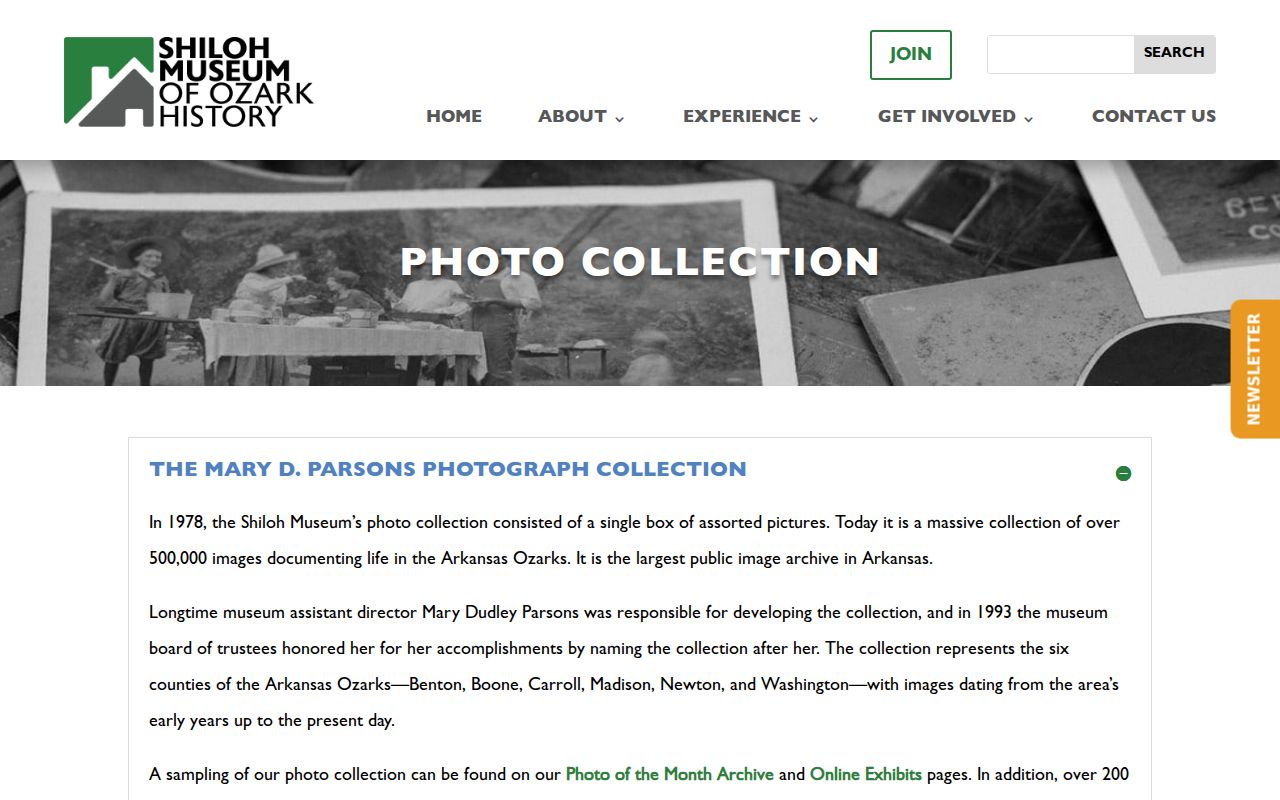
The collection page is a discovery tool; staff help is still needed to connect an image group with a city directory year or household.
Most basic assistance is free, though lengthy work may carry a charge. Posted copies cost $0.20 for common small sheets, $0.40 for 11-by-17 sheets, and $15 for a digital image; domestic handling and postage is $10. Confirm current policies when arranging the appointment.
Springdale City Directory Timeline
The publisher sequence supplies a rough timeline for selecting a book. It also warns against assuming that every year uses the same order, symbols, or coverage area. Telephone books, business locators, and full city directories are different products.
| 1908 | Earliest Springdale directory item in the published Shiloh shelf inventory. |
|---|---|
| 1920-1949 | Selected Southwestern Bell telephone volumes, including joint Fayetteville-Springdale titles. |
| 1952-1959 | Sterling business books and the 1959 Sterling's Springdale City Directory. |
| 1961-1972 | Moorhead and Moorhead's city directory sequence, with missing years. |
| 1974-1988 | Johnson telephone/business locators, supplements, and city directories. |
| 1994-2009 | Polk Springdale and regional books, including the 1996 cross-reference volume. |
| 2010-2016 | AT&T, YPG, Ziplocal, Names & Numbers, and community formats represented in selected years. |
Some inventory date cells appear to have spreadsheet import errors. Use the year printed in the title, then ask museum staff to confirm a questionable catalog row. This protects a Springdale city directory citation from repeating an accidental month-year conversion.
Note: The holdings chronology proves what was cataloged, not the first or last directory ever published for Springdale.
Reading Springdale Directory Evidence
No institution found in the research exposed page images of an actual Springdale resident entry online. Museum rules also prevent an unsanctioned scan. For that reason, no sample entry, punctuation pattern, spouse code, occupation mark, or owner symbol can be stated as local fact. The responsible method is to inspect the key inside the chosen volume and record only the fields that appear there.
A researcher can test for the following field types, without assuming any one book contains them:
- the listed personal or business name and its exact spelling;
- middle initials, spouse or co-resident text when printed;
- street address, telephone number, or business address;
- occupation, employer, or business classification when present;
- symbols explained by that volume's own abbreviation key.
- Criss-cross directory
- An address-ordered book or section used to move from a street and number to a listing.
- Householder index
- A name or address list of the people chosen by the publisher as primary household listings.
- Abbreviation key
- The publisher's legend for short forms and symbols. It controls how that specific volume should be read.
Ask to compare the 1959 Sterling book, one Moorhead volume, a Johnson locator, and the 1996 Polk cross-reference key. Differences between them are evidence, not errors to smooth away.
Springdale City Directory Reverse Search
Polk's 1996 Cross-Reference Directory for Northwest Arkansas is the one explicitly verified reverse volume. It supports the address-first approach associated with a criss-cross directory. Johnson's 1980 locator supplements and other telephone/business locators are possible address tools, but their arrangement must be checked inside each book.
A reverse listing can identify a person associated with an address even when that person did not own the parcel. It cannot, by itself, prove title or continuous residence. Pair the listing with the assessor and deed chain, and treat a gap as an open question. For present address-keyed research, the Springdale street directory process owns the modern parcel and street trail.
Keep roles separate. “Listed at” means the publisher associated a listing with an address; it does not mean the person held title.
Trace Springdale Households by Year
A household trail works best when every observation is tied to one printed year. Retain initials, punctuation, and spelling variants. A changed publisher may alter the format even when a household did not move.
- Choose a target year and search the alphabetical surname section. Note every identifier exactly as printed.
- Check the nearest earlier and later available books. Record address, telephone, occupation, and co-listed names only when the volume prints them.
- Use the reverse section, when verified, to inspect all listings at the address and nearby numbers.
- Pair observations from 1900 through 1950 with the corresponding public federal census schedule.
- Use deeds and tax records to identify owners, since a directory can contain nonowners and omit residents.
- When a person disappears, search newspapers, obituaries, probate, and the next regional directory before drawing a conclusion.
A missing entry can mean a move, death, unlisted number, publisher omission, name change, or a gap in the shelf. No single explanation should be treated as automatic.
Springdale Directories Meet Maps
Springdale's city directory evidence becomes far stronger beside maps and newspapers. The Library of Congress holds six digitized Sanborn editions: 1897, 1904, 1909, 1914, 1924, and 1948. Their sheet counts grow from two to nine. Sanborn maps show street labels, building shape, use, and construction, but not resident names. A directory supplies the name layer.
The Springdale News ran from 1887 to 1990, with 740 digitized issues associated with its Library of Congress title record. OCR can locate a name, address, obituary, notice, or firm, but old type and weak scans can defeat an exact search. Springdale Public Library's NewsBank adds named modern newspaper runs from 2004 onward.
Use the Springdale Public Library catalog and research services to identify database access and local help. Its genealogy resources include Ancestry Library Edition, HeritageQuest, African American Heritage, and NewsBank; confirm whether a particular resource requires in-library use.
Note: Search variant spellings and browse by date when newspaper OCR fails to recognize a Springdale name.
Shiloh Names in Springdale Directories
Early Springdale records may use Shiloh or Holcombe Springs. A duplicate post-office name prompted the change to Springdale in 1872, and the town incorporated in 1878. The railroad arrived in 1881 and drew business away from the old square toward the tracks and later Emma Avenue. These labels mark changing record eras within the same local story.
That geography matters when a family or firm seems to vanish. Search the old place name, the new city name, street variants, and business districts. Plats and Sanborn sheets can bridge a label change. The museum's documented Davis-Reed story shows the value: directories place the law office on Mill Street through 1969, then in the Stack-Sack building on Commercial Street by 1970, with Davis there into the 1990s.
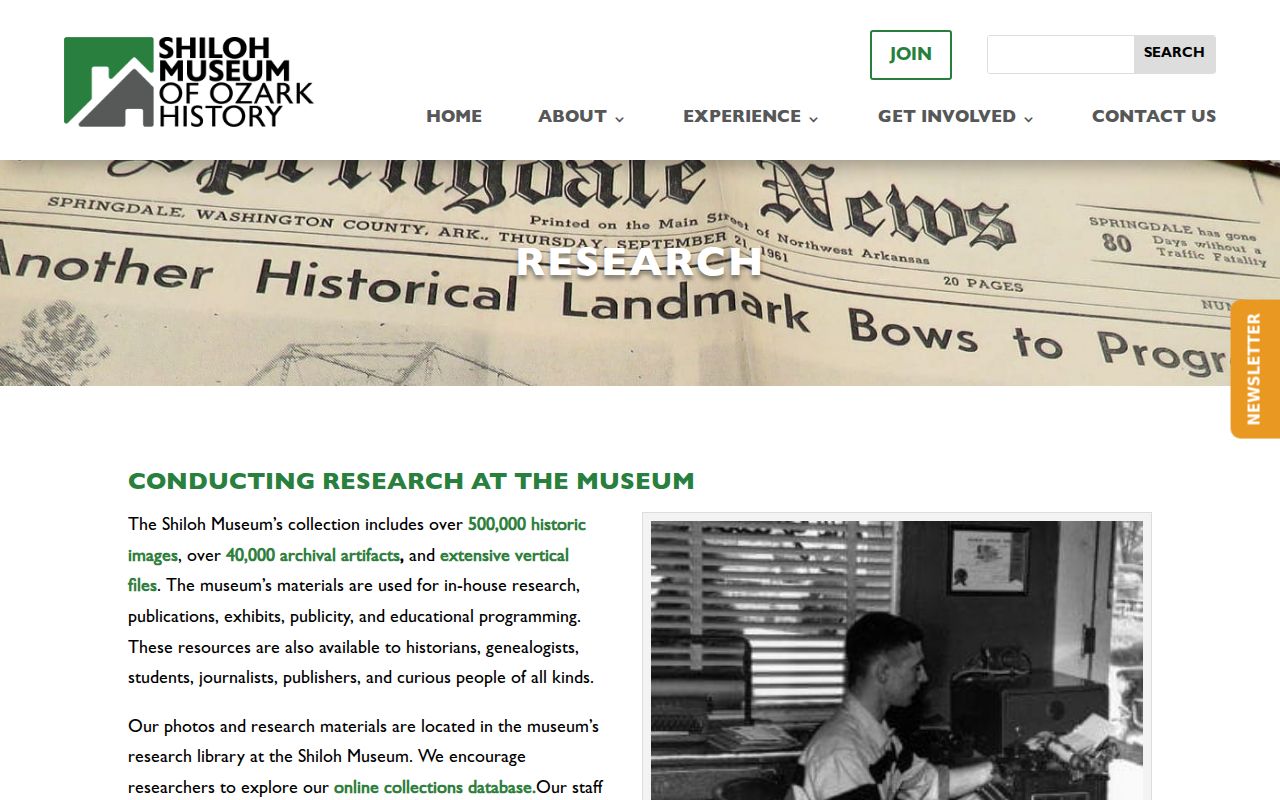
The research page makes clear that a successful visit begins with names, spelling variants, places, dates, and a focused request.
Fill Springdale Directory Gaps
There is no verified complete digital Springdale city directory run. If the target year is absent, shift to the closest telephone book, federal census, land index, tax roll, newspaper, school record, yearbook, church file, or organization archive. Washington County Archives adds an online land index for 1834-1991, a marriage search for 1845-1941, school and tax material, a 1908 plat book, and a 1919 voter-record snapshot. Original handwritten indexes remain available when transcription fails.
Repository choice also follows time and place. Shiloh Museum is the best verified directory shelf. Springdale Public Library supplies database and newspaper support. Washington County Archives holds deep county runs, while the Arkansas State Archives preserves newspaper microfilm and statewide genealogy material. A north Springdale deed or parcel may instead fall in Benton County because modern Springdale crosses the county line.
Each substitute answers a different question. Census schedules identify households at set intervals. Deeds name parties to land transfers. Tax rolls identify assessed ownership. Newspapers add events and relationships. None is a perfect stand-in, but together they can test a city directory claim.
Springdale Directory Family History
Springdale's growth and migration make flexible name searching essential. Use full names, nicknames, middle initials, multi-part surnames, and variant spellings. Search a school, church, club, business, or hometown file when a surname folder is silent. Museum staff specifically recommend this broader association method because public life is often cataloged by event or organization.
For a final identity check, compare at least two independent records from the same period. A city directory plus census, deed, obituary, photograph caption, or probate file is more persuasive than two later copies of the same compiled claim. Vital records open on different clocks in Arkansas: births after 100 years, and deaths, marriages, and divorces after 50 years. Recent certified copies remain subject to eligibility and identification rules.
The goal is a dated chain, not a forced story. Mark gaps, distinguish owners from occupants, and cite the exact volume title and repository. That method keeps a Springdale city directory useful even when the book provides only a brief line.